
Clique aqui para baixar o disco/Download the album - RapidShare
........................................................
 Paulo Moura, 42 anos, 23 como músico profissional, é um exemplo representativo da situação do instrumentista no Brasil. Considerado, por gregos e troianos, como um dos melhores músicos brasileiros e, até hoje, um nome praticamente desconhecido fora dos círculos iniciados em música instrumental. Para sobreviver, Paulo desdobra-se entre atuações em diferentes orquestras, sessões de gravações, aulas particulares e também no Instituto Villa-Lobos, além de clarinetista na Orquestra do Teatro Municipal do Rio de Janeiro. Há 3 anos, no único Festival Internacional de Música realizado em Curitiba onde houve abertura para a música não erudita, Paulo Moura esteve na cidade, a convite de seu amigo Egberto Gismonti, participando de algumas aulas dando oportunidade aos jovens alunos de ouvir um dos maiores instrumentistas do Brasil.
Embora tendo trabalhado muitos anos em conjuntos de gafieira, Paulo sempre foi um músico de formação jazzística, tendo criado há algum tempo, uma "big band". Afora as dezenas de elepes em que participou como instrumentista, já teve chance de fazer 8 elepes, três dos quais, do mais alto gabarito, na Equipe.
Agora, finalmente, Paulo Moura está vendo o seu trabalho ter uma repercussão maior, ao gravar um dos melhores elepes do ano: "Confusão Urbana, Suburbana e Rural" (RCA Victor, 103.168, junho/76).
De princípio é bom que se diga de que se trata de um dos mais brasileiros discos feitos este ano (e também nos últimos). Apesar de toda sua formação (válida) jazzística, Paulo Moura soube fazer uma feliz união de cuíca e saxofone, pandeiro e flautas, tamborim e trompas, executando sambas, maxixes, carimbós, choros e baiões.
"Confusão Urbana, Suburbana e Rural" é o exemplo do disco bem produzido e, neste caso, uma revelação de Martinho da Vila, sambista e cantor de obra desigual que, mostrando amizade e respeito pelo talento de Paulo Moura, conseguiu lhe dar condições de fazer um elepe igualmente admirável em todas as faixas. Não há, ao longo dos 12 temas gravados um único momento que não seja perfeito, mostrando a habilidade de Paulo Moura em diversos tipos de instrumentos - sax soprano, clarinete e alto.
Mas o disco não é apenas um elepe para destacar Paulo Moura. Houve uma democrática possibilidade de excelentes instrumentistas mostrarem suas habilidades, oportunidade que não acontece todas as horas. Mesmo instrumentistas de boa formação, mas comprometidos com modismos e pretensas vanguardas - como Toninho Horta (violão) e Wagner Tiso (órgão e piano), souberam sentir o espírito de brasilidade presente em todas as faixas e desenvolver um trabalho verde-amarelo, sem formalismo - em que a improvisação e a espontaneidade não eliminam entretanto a inteligência, o bom gosto e sobretudo a beleza das imagens sonoras. Nos violões, temos, por exemplo, além do já citado Toninho Horta, também Valdir e a notável Rosinha de Valença; nos cavaquinhos, Mané do Cavaco e Neco; Alexandre Papão e Paulo Batera, Jamil no baixo, Julinho no acordeão. Mas, sem dúvida, são os metais e percussão que ocupam os grandes momentos. Por exemplo, em "Notícia" (Nelson Cavaquinho - Alcides Caminha - Norival Bahia), há uma verdadeira demonstração de virtuosismo de Zeca da Cuíca, cujo som único integra-se aos outros instrumentos - num trabalho perfeito. Na percussão tivemos, Serginho, Raphael, Zeca da Cuíca, Doutor, Eliseu, Marçal, Luna e Paulinho. E nos metais, está um verdadeiro "Butantã" de cobras: Marcio Montarroio, Nivaldo, Maurilio, Joãosinho, Raulzinho, Cacau, Mauro Amoroso, Paulo Bombardino, Altamiro Carrilho, Lloyd Minelli, Toninho, Pirulito, Ré Menor e Ary. Há também violinos (grupos de José Alves) e um vocal formado por Miucha (Heloisa Buarque de Holanda), Isaura Tiso e Gilda Horta.
Acredito, sinceramente que em termos instrumentistas, "Confusão Urbana, Suburbana e Rural" não é só dos melhores discos deste ano mas um elepe clássico, destinado a se tornar como uma obra disputada no futuro. Ainda bem que o brasileiro está tomando conhecimento disto e 10 mil cópias já foram vendidas.
Aramis Millarch - 04/07/1976 - publicado no jornal Estado do Paraná - extraído do site Tablóide Digital
Para mais informação, visite o site do Paulo Moura
Para mais informação, visite o site do Paulo Moura
************************
 A legend of instrumental music for half a century, clarinet and saxophone virtuoso Paulo Moura is the first Brazilian instrumentalist to be honored with the Latin Grammy (2000) for his CD "Paulo Moura e Os Oito Batutas", which popularized internationally the century-old Brazilian instrumental style called "choro". To categorize or "label" Paulo Moura is next to impossible. His name is spoken with reverence in musical circles ranging from jazz to classical, and known throughout the world. His sound - whether on saxophone or clarinet is unmistakable. His unique sense of improvisation, his interpretations and phrasings, have made him the model that a generation of Brazilian instrumentalists have looked up to. And while he is passionately dedicated to the preservation of the various traditions of Brazilian music, he is arguably Brazil's greatest living interpreter of mainstream improvisational jazz. The youngest of ten siblings, born in the mid-1930s to a working class Afro-Brazilian family in a small city in Brasil, Paulo Moura began playing as a child in his father's band and by age 19 appeared as soloist with the Brazilian Symphony Orchestra, playing Weber's Concertino for Clarinet and Orchestra. However his devotion to classical music was accompanied from the very beginning by a profound passion for and understanding of the popular tradition of his country. While he was learning harmony, counterpoint and fugue in private classes, he would play pop music at the neighborhood gafieira (dance hall). Out of this mixture emerged a style that shows a complexity of elements: his Afro-Brazilian origins, the pop music of the poorer classes of Rio, his experience during the golden age of Radio Nacional and his "higher education" as a first clarinetist of the Municipal Theater's Orchestra.
His international career as a soloist started in 1953 in Mexico playing with Ari Barroso, the famous Brazilian composer. And since his acclaimed performance at Carnegie Hall in 1962, he has been frequently invited to play in the US, Great Britain, Japan, Africa, Germany, Switzerland, Holland, Greece, Argentina, and France. His recordings have been released in the US, France, and Japan, and he has appearances in music festivals in the US, France, Switzerland (Montreux), Rio de Janeiro (Free Jazz), and Germany. He has taught as a visiting professor, along with Karl Berger, at the Creative Music Studio in Woodstock and at the Zurich Festival where he held a Brazilian music workshop. He continues to be a highly influential force in Brazilian popular music, teaching music theory and arranging recordings by Elis Regina and Milton Nascimento. His 1976 solo album Confusão Urbana, Suburbana e Rural, is considered a masterful tour through landscapes of modern and traditional Brazilian music. His career as a composer and conductor also include several symphonic pieces. Major public presentations include the 1988 commemoration of the Centennial of Abolition of Slavery in Brasil, featuring the National Symphonic Orchestra, and in 1992 the inaugural piece for the world conference ECO92 that included a choir of 120 public school children.
Because of his artistic prominence Mr. Moura has held important and prestigious public positions: Director of the Museum of Image and Sound in Rio de Janeiro (1997-99), and member of the Municipal Council for the arts (1997-99). In 2000, Moura composed and performed the Urban Fantasy for Alto sax and Orchestra for the centennial of the Oswaldo Cruz Foundation. He was featured in the film "Villa-Lobos: A Passion" for which he also arranged and performed the opening soundtrack, and he performed in a 19-concert tour in Japan with the singer Joyce. His discography includes over 25 recordings.
Extracted from Gafieira Dance Brasil
************************
Even though instrumental choro has been jazz-influenced for decades, reedsman Moura really falls somewhere between choro and jazz-samba. The jazz elements are very strong, the local ingredients more varied and more Afro-Brazilian than usual, and he is fond of a big-band sound and a somewhat staid avant-gardism, both of which are foreign to the mainstream idiom. But the spirit and the underlying sound are choro rather than anything else, even if they do stretch the boundaries. And Moura is a fine player with a fine group.
John Storm Roberts - Original Music - extracted from All Music Guide
For more info, visit Paulo Moura's site
For more info, visit Paulo Moura's site


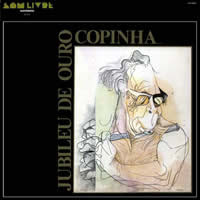
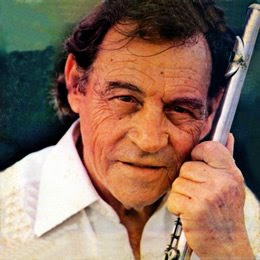 Copinha era filho de italianos e tinha oito irmãos, todos eles músicos. Seu primeiro professor de flauta foi Vicente, irmão mais velho. E, nas serenatas e rodas de choro de São Paulo, iniciou-se no jeito de tocar em grupo, solar e acompanhar.
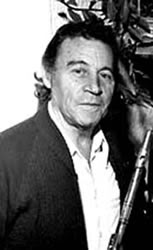 An active sideman for recording sessions, Copinha accompanied the stars Carmen Miranda, Francisco Alves, Mário Reis, Carlos Galhardo, Orlando Silva, Sílvio Caldas, Nuno Roland, Rui Rei, and many others in the Golden Age of song (between the '30s and '40s). During the bossa nova years (late '50s to early '60s), he accompanied Elizeth Cardoso, João Gilberto (since his first album), and other icons of the movement. He recorded Pierre Barouh's score for the famous film Un Homme et une Femme, together with Baden Powell, Milton Banana, and the Castro-Neves brothers: Oscar and Iko. From the '70s to the '80s, he was a sideman for Caetano Veloso, Chico Buarque, Paulinho da Viola, Roberto Carlos, Gilberto Gil, and others. He also had international success with his solo work, which was ahead of his own orchestra.
  With his brothers and nephews, he organized the Orquestra Irmãos Cópia (who played regularly until 1934), where crooners like Rui Rei, Nuno Roland, and Grande Otelo performed. Completing an engineering degree at a university, he worked for some time in that profession, but never abandoned his busy schedule as a musician. In 1931, he joined the quartet of Spartaco Rossi on their tour of Germany. In 1932, he accompanied famous singers Mário Reis and Francisco Alves. In 1933, he performed at Rádio Cruzeiro do Sul with Maestro Gaó's Orquestra Columbia, joining them regularly between 1937 and 1939.
 Em 1990, formou-se em música para cinema e televisão na Berklee College of Music de Boston (Massachussets, EUA).
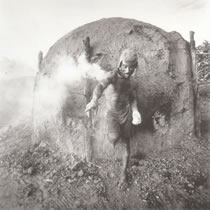 Nigel Noble's documentary about the lives of the carvoeiros, the migrant workers who produce charcoal from the trees of the Brazilian rain forests, is based on an award-winning photographic essay, and that is how it is best appreciated.
 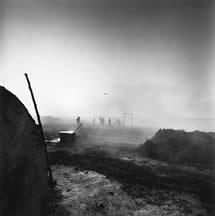 The trees harvested from the forests are used in the production of charcoal for the steel industries around the world to manufacture cars, buildings, etc. While the ecological consequences of this are touched upon in the film, it is generally far more interested in depicting the exact nature of the process and exploring the lives of the workers who must endure highly difficult conditions for very modest wages. The people on display here range from a 76-year-old man who exhibits an impressive physical vigor -- his parents, he informs us, lived well into their hundreds -- to a 9-year-old child who, it's quite clear, has few options for his future.
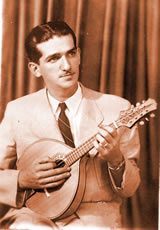 Maior referência brasileira no instrumento que virou parte de seu nome, Jacob alçou o bandolim a um lugar de honra na música brasileira. Esse trabalho vinha sendo desenvolvido antes por outros instrumentistas, como Luperce Miranda, mas foi Jacob quem colocou definitivamente o bandolim como instrumento solista por excelência.
 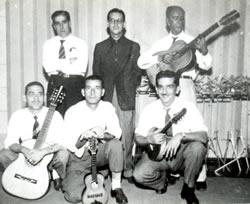 Jacob do Bandolim is one of the first names in the history of the choro genre. A serious and dedicated musician, he instilled a high degree of professionalism in the traditionally relaxed music — even if he was never a professional himself (he made a living as a notary). He struggled to preserve Brazilian roots, and fought to impose his artistic sincerity on the music industry. He left important compositions that were incorporated in the repertory of chorões.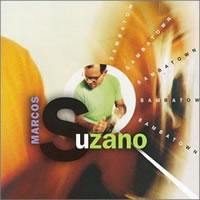
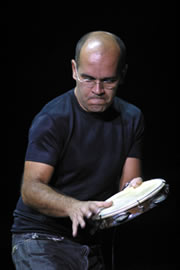 Percussionista carioca, escutava rock na adolescência até ouvir o naipe de percussão de um bloco carnavalesco e ficar fascinado. Comprou diversos instrumentos, tocou surdo, cuíca, e fixou-se no pandeiro depois de assistir a um programa com Jorginho do Pandeiro, do conjunto Época de Ouro. Fez faculdade de economia ao mesmo tempo em que freqüentava a casa de Hermeto Pascoal e Radamés Gnattali. Depois de formado, estudou ritmos africanos ao lado de um grupo com Paulo Moura, tocou com Zizi Possi, Água de Moringa, Marisa Monte, Zé Kéti, Gilberto Gil, Lenine e outros. Mais tarde desenvolveu técnicas para o instrumento, difundidas em cursos e workshops. Em 1993 sua parceria com o músico pernambucano Lenine se transformou no elogiado disco "Olho de Peixe", lançado pela gravadora Velas. Seu primeiro disco solo, "Sambatown", é de 1996, e traz concepções inovadoras para o uso do pandeiro, intensificando a batida samba-funk e a utilização de sons mais graves. Em 2000 saiu pela Trama o CD "Flash", em que o músico envereda ainda mais pelos caminhos da eletrônica.
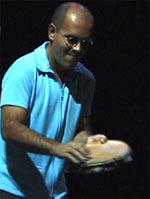 Marcos Suzano was born in Rio de Janeiro, Brazil. Originally a rock fan, he experienced a carnaval bloco and became passionate about percussion thereafter. He quickly settled on the pandeiro as his primary instrument after witnessing the artistry of Jorginho do Pandeiro of the choro group Época de Ouro.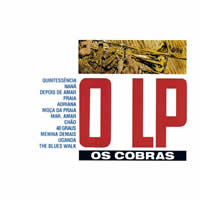
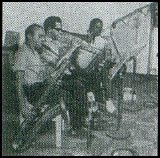 Em 1963, Milton Banana, Tenório Jr., Raulzinho, Zezinho e Hamilton Cruz (com participação de Paulo Moura e J.T. Meirelles) se intitularam Os Cobras e gravaram O LP. Pode parecer pretensioso, mas o nome da banda corresponde ao porte dos músicos e O LP é uma obra prima e um dos discos fundamentais do samba-jazz.
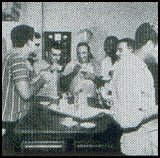 In 1963, Milton Banana, Tenório Jr, Raulzinho, Zezinho and Hamilton Cruz (with participation of Paulo Moura and J.T. Meirelles) had intitled themselves as Os Cobras and had recorded O LP. It can seem a little pretentious, but the name of the band corresponds to the excellence of the musicians, and O LP is a masterpiece and one of basic records of samba-jazz.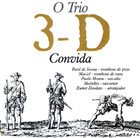
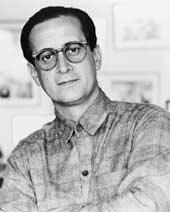 Fruto da “febre dos trios” característica da segunda fase da bossa nova, quando uma geração de instrumentistas da mais alta impedância e estirpe passou a reinar no Beco das Garrafas, em contraponto estético à leveza da bossa “peso-pluma” (nas palavras de Ruy Castro) de Jobim, Bonfá & João Gilberto, o Trio 3D representou um marco na carreira de seu fundador, o carioca Antonio Adolfo Maurity Sabóia. Nascido em 10 de fevereiro de 1947, estudou no Conservatório de Música Lorenzo Fernandes, passando a frequentar o Bottle’s Bar e o Little Club a partir de 1963, integrando o grupo Samba Cinco.
 Os convidados surgem nas faixas do “lado B”. Edson Maciel desliza seu trombone de vara, pela bela melodia de “Primavera” (Carlos Lyra), em atmosfera de intenso lirismo mas nada açucarada, enquanto Raul de Souza, que três meses antes havia lançado seu disco-solo “À Vontade Mesmo” pela RCA, conta “um, dois, três” antes de esbaldar-se no trombone de válvula em “Bye Bye Blackbird”, aprontando solo de estonteante fluência. Meirelles (líder do Copa 5) mostra sua classe no sax-tenor no sambop “Tema 3D”, única composição de Adolfo incluida no repertório. E Paulo Moura, no sax-alto, destrincha “O Passarinho”, obscura parceria de Chico Feitosa & Lula Freire, encaixando explícita referência a “Take Five”.
 When people think of Brazilian jazz in the '60s, the first thing that comes to mind is bossa nova — a caressing, subtle, laidback blend of cool jazz and samba. But not all of the Brazilian jazz from that decade is bossa nova. Some Brazilian improvisers were influenced by the more aggressive and extroverted sounds of hard bop. They respected Stan Getz' legendary work with João Gilberto and Antonio Carlos Jobim, but they preferred a tougher, more hard-swinging style of Brazilian jazz. They identified with the forcefulness of Phil Woods, Cannonball Adderley, Horace Silver, and Art Blakey's Jazz Messengers, rather than the subtle introspection of Chet Baker and Lee Konitz. In the '60s, Brazil's hard boppers included trombonist Raul de Souza and 3-D, which consisted of pianist Antonio Adolfo, bassist Carlos Monjardin, and drummer Nelson Serra De Castro. Raul de Souza isn't actually the leader on Convida; this is really a 3-D album, and Raul de Souza is among the guest soloists (who also include tenor saxman J.T. Meirelles, and alto saxman Paulo Moura). But because the underexposed Raul de Souza hasn't recorded nearly as often as he should have, his admirers will want to hear Convida, which has never been released in the United States. Convida originally came out on LP in Brazil in 1965, and in 2002, RCA's Brazilian division finally reissued it on CD. Although Raul de Souza has some inspired guest spots, the main soloist is Adolfo — a lyrical yet exuberant pianist with a strong Red Garland influence. Adolfo also inspires comparisons to Wynton Kelly and Tommy Flanagan, and he favors a passionate hard bop/samba blend on Brazilian songs as well as a few American standards. Jazz enthusiasts who don't live in Brazil would do well to search for import copies of this excellent CD.
 Br-Instrumental no Twitter


 Postagens


