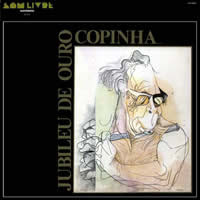
Clique aqui para baixar o disco/Download the album - RapidShare
........................................................
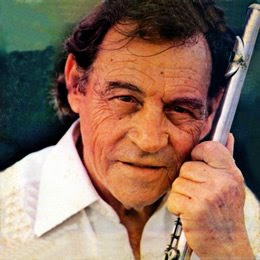 Copinha era filho de italianos e tinha oito irmãos, todos eles músicos. Seu primeiro professor de flauta foi Vicente, irmão mais velho. E, nas serenatas e rodas de choro de São Paulo, iniciou-se no jeito de tocar em grupo, solar e acompanhar.
"Eu comecei a estudar com 7 anos de idade, em 1917. Mas estudava direito, estudava música primeiro. Hoje a gurizada pega um instrumento e vai tocar de ouvido. Estudei música, solfejo, depois mais tarde harmonias, essa coisa toda. Com 9 anos é que eu peguei a flauta. Com nove anos eu já fazia serenata com o Canhoto [Américo Jacomino]. Toquei muitas vezes. Ele gostava e dizia: 'Esse garoto é bom'."
Antes dos 20 anos de idade, dominava também o clarinete e o saxofone, que aprendera no Conservatório Dramático e Musical de São Paulo. Embora Copinha tocasse também clarinete e saxofone, o seu instrumento de preferência, e o que mais utilizou durante toda a carreira, foi a flauta. O que caracteriza Copinha, além da evidente qualidade técnica e musical, é a capacidade de se adaptar a uma enorme variedade de estilos.
Não existe uma "flauta" de Copinha, que se imponha de maneira uniforme independentemente do que e com quem esteja tocando; porém tampouco falta personalidade à sua execução, pois alguns traços estão presentes em todas as suas intervenções: a limpeza do som, o estilo chorado, a economia de notas e, acima de tudo, a interação com os outros instrumentos ou com a voz – a flauta de Copinha está sempre integrada ao conjunto sonoro, e mesmo quando sola não ignora o acompanhamento.
Não existe melhor maneira de perceber tudo isso do que ouvir sua atuação com João Gilberto e, depois, com Paulinho da Viola. Escutar os discos "Chega de Saudade" e, em seguida, "Nervos de Aço".
Apesar de sua discrição e de seu papel de acompanhante, Copinha era respeitado pelos grandes músicos. A ponto de Hermeto Pascoal, um músico em tudo e por tudo diferente, cuja flauta soa no mais das vezes nervosa, "suja", agressiva, ter homenageado o colega com a composição "Salve, Copinha" (gravada no disco "Brasil Universo").
Copinha tem menos de 20 composições gravadas, a maioria nos seus próprios discos. São quase todas obras tradicionais, românticas, típicas das serestas. O compositor Copinha viveu no segundo plano em relação ao músico, pelo menos no que se refere às gravações.
A originalidade de arranjador de Copinha não deve ser procurada nos discos orquestrais e sim, principalmente, em três discos de Paulinho da Viola para os quais escreveu os arranjos: "Nervos de Aço", "Memórias Cantando" e "Memórias Chorando" – dois discos de canções e um disco instrumental.
Sem prejudicar em nada o balanço e o sincopado dos sambas e choros que Paulinho escreveu ou interpreta, Copinha cria um ambiente camerístico no qual cada músico tem seu papel mas, também, a sua liberdade. Há um jogo de som e silêncio, tanto de cada instrumento isolado quanto do grupo como um todo. Instrumentos que se emparelham de maneira imprevista e original. E divisões surpreendentes – como nos contracantos de "Comprimido".
"Interessante a maneira com a qual Copinha combina os instrumentos aqui: bateria (vassourinha), baixo, violão sete cordas [Raphael Rabello] e flauta. Copinha, neste arranjo, mostra como era a vanguarda no choro. Como Paulo Moura, tem uma visão bem livre dos arranjos, com poucas sinalizações, mas fundamentais". (Hélio Amaral)
O disco a que se faz referência aqui é "Bonfiglio de Oliveira Interpretado por Copinha e seu Conjunto". Ao rever a música de um antigo compositor de choro, mais uma vez Copinha preserva o essencial da tradição mas não despreza a modernidade, como na junção do contrabaixo com o violão de sete cordas.
Copinha teve duas carreiras distintas: a das orquestras e grandes conjuntos, e a de instrumentista em pequenos grupos, ou acompanhando grupos e cantores. Ambas foram longas, intensas, e produziram resultados muito distintos. Começou a carreira profissional em 1934, como flautista, fazendo fundo para filmes mudos em cinemas de São Paulo e tocando em programas de rádio, quando teve a oportunidade de se apresentar com os violonistas Garoto e Armandinho.
Mas logo deu início à criação de orquestras, principiando pela Orquestra Irmãos Cópia, sob a liderança do irmão mais velho, Vicente; depois,"Juca e seus rapazes"; e, mais adiante, a orquestra do Maestro Gaó (Orquestra Colúmbia), em apresentações nas rádios paulistas.
Com Gaó, ainda na década de 1930, mudou-se para o Rio de Janeiro, onde tocou em boates, cabarés (com Pixinguinha, no Dancing Eldorado), teatros e cassinos; com a orquestra de Simon Boutman, no Cassino do Copacabana Palace; Carlos Machado, no Cassino da Urca; e Paul Morris, no Quitandinha, em Petrópolis.
Com vocação de andarilho, desde a década de 1930 empreendeu um ciclo de viagens internacionais que se estendeu até o final da vida, sozinho, em grupos, como músico de orquestras ou maestro.
Corria a década de 1940, e Copinha criou a primeira orquestra sob sua liderança, chamada inicialmente de Cópia e sua Orquestra. Com ela, ao longo de quase 20 anos, tornou-se um dos principais acompanhantes de cantores como Sílvio Caldas, Francisco Alves, Mário Reis, Carmen Miranda, Cyro Monteiro, Dircinha Batista, Aracy de Almeida, Orlando Silva e Dorival Caymmi.
Em 1958, recebeu em sua orquestra um músico nordestino que viria a fazer história na música brasileira: Hermeto Pascoal mudou-se de São Paulo para o Rio de Janeiro a fim de tocar acordeom na Orquestra do Maestro Copinha, que então se apresentava no Hotel Excelsior. E, no mesmo ano, juntou-se à orquestra o pianista acreano João Donato, durante uma temporada no Hotel Copacabana Palace.
A partir da década de 1960, tornou-se um dos mais requisitados músicos de estúdio e de shows do Brasil. O espaço das orquestras rareava pela soma das novas tendências da música com o alto custo necessário para mantê-las. E Copinha afastou-se aos poucos, primeiro desmobilizando sua própria orquestra para trabalhar nas orquestras da TV Tupi e, depois, da Rede Globo e, por fim, praticamente abandonando os grupos orquestrais.
São raros os cantores e compositores de primeira linha da música brasileira, a partir da década de 1960, que não tenham contado com Copinha e seus instrumentos de sopro – particularmente a flauta. Chico Buarque, Caetano Veloso, Gilberto Gil, Milton Nascimento, Cartola e Ivan Lins são apenas alguns deles.
É de Copinha a flauta que se ouve na famosíssima introdução de "Chega de Saudade", que abre o primeiro LP homônimo de João Gilberto, com arranjos de Tom Jobim. Assim como é de Copinha a flauta que acompanha João em outras faixas do mesmo LP.
Copinha toca flauta em "Canção do Amor Demais", de Elizete Cardoso, considerado um dos marcos iniciais da bossa nova. São dele os sopros em grande parte dos discos de carreira de Paulinho da Viola.
Extraído do site Músicos do Brasil: Uma Enciclopédia Instrumental
************************
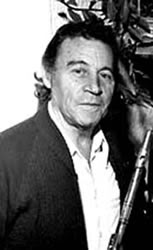 An active sideman for recording sessions, Copinha accompanied the stars Carmen Miranda, Francisco Alves, Mário Reis, Carlos Galhardo, Orlando Silva, Sílvio Caldas, Nuno Roland, Rui Rei, and many others in the Golden Age of song (between the '30s and '40s). During the bossa nova years (late '50s to early '60s), he accompanied Elizeth Cardoso, João Gilberto (since his first album), and other icons of the movement. He recorded Pierre Barouh's score for the famous film Un Homme et une Femme, together with Baden Powell, Milton Banana, and the Castro-Neves brothers: Oscar and Iko. From the '70s to the '80s, he was a sideman for Caetano Veloso, Chico Buarque, Paulinho da Viola, Roberto Carlos, Gilberto Gil, and others. He also had international success with his solo work, which was ahead of his own orchestra.
 Born the seventh son of Italian immigrants, he began his musical studies at age nine with his older brother, Vicente Cópia (all his brothers were musicians). Taking up the flute, he became a professional in 1924, accompanying silent movies until the advent of sound in 1930. In 1928, he took up the clarinet and the saxophone and played around a lot. In 1930, he performed several times for Rádio Paulista, accompanied by Garoto. His first album was recorded in that year, together with Garoto, Aimoré, Armandinho (all violonistas [acoustic guitar players]), and singer Moreira da Silva.
 With his brothers and nephews, he organized the Orquestra Irmãos Cópia (who played regularly until 1934), where crooners like Rui Rei, Nuno Roland, and Grande Otelo performed. Completing an engineering degree at a university, he worked for some time in that profession, but never abandoned his busy schedule as a musician. In 1931, he joined the quartet of Spartaco Rossi on their tour of Germany. In 1932, he accompanied famous singers Mário Reis and Francisco Alves. In 1933, he performed at Rádio Cruzeiro do Sul with Maestro Gaó's Orquestra Columbia, joining them regularly between 1937 and 1939.
Expanding his activities to Rio de Janeiro in 1936, he was hired by Rádio Ipanema and played with Pixinguinha at the Eldorado gafieira. He was an active sideman during the '30s and '40s. From 1939 to 1943 he joined the orchestra of Simon Bountman, and from 1944 to 1946 he performed with the orchestra of Carlos Machado at the Cassino da Urca, playing also in other casinos. His own orchestra was formed in 1946; they performed until 1959 at the Casino of the Copacabana Palace Hotel. In that period, coinciding with the inception of bossa nova, several of the important names of the movement joined his orchestra or were accompanied by them, such as João Gilberto, João Donato, Milton Banana, and many others. In 1958, after having accompanied Elizeth Cardoso on the historic album where bossa nova was launched (Canção do Amor Demais), he was invited by Tom Jobim to appear on the debut album of João Gilberto. In the bossa nova period, he continued his active participation as a sideman in recordings. In 1966, he performed in Monaco with his orchestra, Copinha do Rio. In 1967, he teamed with pianist Dom Salvador, drummer Chico Batera, and bassist Sérgio Barroso, playing in Miami, Dallas, and Minneapolis (U.S.A.). His 50-year career was commemorated with the recording of the LP Jubileu de Ouro (Som Livre), in July 1975.
Alvaro Neder - extracted from All Music Guide


 Neste pacote de registros de lançamentos excelentes - todos sérios candidatos à lista dos melhores do ano, não poderia faltar ao menos uma citação de "Trem Mineiro", terceiro elepê instrumental de Wagner Tiso, Maestro, arranjador, tecladista e sobretudo compositor, este mineiro de 36 anos, uma larga quilometragem musical, identificado com Milton Nascimento desde sua adolescência, é hoje um dos arranjadores mais diasputados. Como instrumentista compositor já revelou na série de 3 elepês do Som Imaginário toda uma extraordinária versatilidade. Mas tem sido nestes últimos três anos, em álbuns da Odeon, onde tem tido liberdade para colocar todas suas idéias e concepções, que tem atingido os pontos mais altos. Ao contrário dos dois discos instrumentais anteriores, "Trem Mineiro", por razões econômicas, não teve a ampla secção de cordas que Tiso tão bem sabe utilizar. Em compensação, a integração com músicos como Mauro Senise (sax alto), Cidinho (percussão), Luisão (baixo), Roberto Silva (bateria), Ricardo Silveira (guitarra - violão - ovation), Serginho (trombone), Leo Gandelman (sax alto), faz com que cada uma das oito faixas se ouça com uma imensa emoção. Classificar em gêneros e graus, procurar descrição de palavras para transmitir a beleza, a harmonia e as cores sonoras com que Wagner marca este seu trabalho, é, em nosso entender, quase impossível. Com exceção de "Banda da Capital", parceria com Nivaldo Ornellas e uma regravação de "Os Pássaros" (Milton Nascimento) as outras composições são exclusivamente de Wagner. E em todas sente-se como um trabalho perfeito quando lhe dão condições: "Cello Caribe", "Sobe Serra, Desce Serra", "Mata Burro", "Trem Torto" e "Trem Mineiro", são temas instrumentais que sem deixarem de serem brasileiríssimos, podem emocionar pessoas de qualquer parte do mundo. Sem falar em "Armina", composição dos tempos do Som Imaginário, que volta em nova roupagem. Um disco emocionante e antológico, o mínimo a dizer...
 Wagner Tiso is a model of contemporary musician. Composer, conductor, arranger, his creations are imbued with a vigorous Brazilian sound expression. The fusion of several musical elements, which shape his compositions – from the gipsy sentimentalism to the baroque style of Minas Gerais – gives this magnificent musician a sense of exceptional musicality.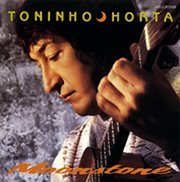
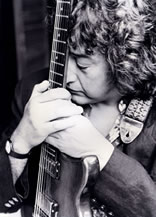 Antônio Maurício Horta de Melo nasceu em Belo Horizonte, no bairro Floresta, em 2 de dezembro de 1948. Filho de Prudente de Melo, mestre-de-obras, e Geralda Magela Horta de Melo, funcionária pública. Seu pai tocava violão e a mãe, violão e bandolim. O primeiro músico da família foi o avô materno, João Horta, funcionário da Central do Brasil que montava uma banda em cada lugar em que morava. Paulo, um de seus cinco irmãos, foi quem mais o incentivou para música. Aos 10 anos, Toninho começou a tocar violão e, aos 13, fez sua primeira composição, "Barquinho Vem". Aos 19 anos, iniciou a carreira de músico profissional tocando na noite. Na adolescência, conheceu Milton Nascimento, Márcio e Lô Borges e Beto Guedes – aos dois últimos ensinou harmonia. Mas foi a partir do Festival de Belo Horizonte, em 1969, que começou a união musical do grupo. No final dos anos 60, foi para o Rio de Janeiro, onde trabalhou com artistas como Elis Regina. Em 1972, organizou arranjos de base, tocou guitarra, baixo e percussão no disco Clube da Esquina. Após 10 anos nos EUA, em 1999 retornou ao Brasil com uma carreira internacional consolidada. Hoje dedica-se ao seu selo Minas Records e a publicação do Livrão da Música Brasileira, compilação de cerca de 700 partituras, abrangendo desde Carlos Gomes até compositores contemporâneos.
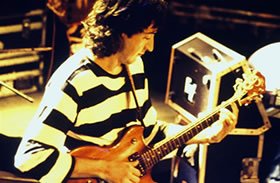 Horta embraces the most beautiful gestures of fingerstyle bossa nova, accompanying his own vocal lines with a grace that transcends mere harmonization; at a turn, he dispatches felt-toned octaves in soaring bop mode that utterly desegrates the invocations of jazz, classical, folk and african rythms within his shifting, surreal progressions. "I love to show a conception of my music", asserts Horta in an English riddled with the dialect of his native Belo Horizonte, the capital of the Brazilian state Minas Gerais. "That's much more meaningful to me than to just play guitar".
 Diamond Land, Toninho's American label debut of last year, represented the results of his dabblings in orchestral study: Its lush, sweeping arrangements are propelled by a guitar voice that sings his melodies with a provocative sweetness. Moonstone is a return to the intimate setting that lends a more organic quality to Horta's compositions, several of which he performed unaccompanied at the urging of producer Ricardo Silveira, a fine Brazilian guitarist in his own right. For the ensemble pieces, Toninho is joined again by Egan and Gottlieb, along with the Brazilian vocal group Boca Livre, drummer Paulo Braga, bassist Steve Rodby, pianist Eliane Elias and percussionist Nana Vasconcelos, among many other stylistically diverse musicians.
 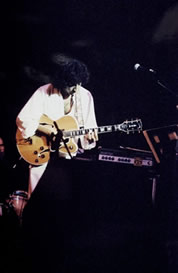 I love to play guitar, but I don't think I'd want to be a guitarist like Pat Metheny, because I like composing, singing, playing piano, production-I co-produced the first album I did here. But I thought I'd make it more simple, with less outside people, to show more of the styles, acoustic and electric, that I can play.
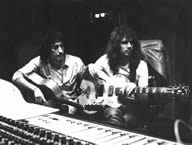 When Pat and Lyle came to Brazil, they said " Let's go to Clube Da Esquina to take pictures", but esquina is just a corner; it doesn't have a club (laughs), it's only a name. Close to the Minas Gerais corner in Brazil, there was a house belonging to (singer) Lo Borges' family: his father, his brothers, everybody playing and singing and writing songs, and sometimes I'd go and play with them. People would come and play until Milton broke out in Brazil in 1967, and then we started to play with him. I think my similarity to Pat is more natural than anything else. I loved him, and I never listened to just one solo. He's listened to my stuff a lot, but I don't think he copied anything. It's a similarity of emotion.
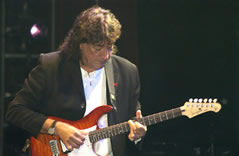 I worked in Rio for 10 years, and my producer told me, "Your place is the United States, not Brazil. "In Brazil there aremany good musicians and a lot of rythms, like baiao, samba, modinha- because Brazil is so big. The north is heavy influenced by Africa. The state of Bahia has african influences, and instruments like the congas (sings percussively)- Minas Gerais, my state, is heavily influenced by Spain and Portugal. Modinhas are like waltzes- not like jazz waltz-but Chorinhos and Modinhas have many influences from Spain and Portugal; mandolins, violins and guitar for example. The melodies and rythms are very Spanish. The rythms are very folk-song-like. And Rio de Janeiro has a more urban influence. Brazil is great musically, but to make music there, it's very, very hard, economically, politically, and socially. You see, you> have contemporary jazz, rock and pop. In Brazil now, we have instrumental music (laughs). The musicians don't have many opportunities, and to play at nights at clubs is hard. Also, there isn't much information. Here, you can buy the records of John Coltrane or Chopin or debussy, and you have the solos of Tal Farlow and Barney Kessel and Joe Pass. And the Berklee school, you get a thousand people playing the same thing, which actually is kind of bad. In Brazil, you don't have this, because it's hard to get a teacher and have big schools and information and books. I hope to release in Brazil a Real Book with about 350 songs by composers from Minas Gerais. Many important guys have risen from Brazil. The cultural secretary of Minas Gerais may be able to give the money for the project. It's important for the United States, because Brazilian music is better here again now, and there is interest in these harmonies and melodies.
 Br-Instrumental no Twitter


 Postagens


