
Clique aqui para baixar o disco/Download the album - Mediafire . enviado por J. Neto
Clique aqui para baixar o disco/Download the album - RapidShare
........................................................
 Depois de permanecer quase 15 anos no Exterior, especialmente nos EUA. Sivuca (Severino Dias de Oliveira), paraibano de Itabaiana, 50 anos (completados dia 26 de maio último), começa a reencontrar o seu justo espaço no Brasil. Acordeonista, pianista, compositor, Sivuca é um artista de imensos recursos, que encontrou em Glorinha Gadelha, não só a companhia ideal, mas também parcerias musical: nos últimos 2 anos, sua carreira teve um excelente pique, lotando teatros, emplacando sucessos como "João e Maria", música de quase 30 anos passados, que agora com a poética letra de Chico Buarque, transformou-se em antólogia interpretação de Nara Leão.
Há 60 dias, a Copacabana lançou simultaneamente dois elepês, de Sivuca, buscando atingir faixas diferentes de públicos: "Cabelo de Milho" e "Forró e Frevo". Apelido carinhoso que seus amigos lhe deram, "Cabelo de Milho" traz o Sivuca múltiplo, executando sanfona, piano elétrico, sintetizador, cravo, piano acústico, ovation e gaita de boca. E canta, ainda, dele e de Glorinha, "Te Pego na Mentira" e "Feira de Mangaio", e com Paulinho Tapajós, "Mancho e Fêmea", "Cabelo de Milho", além do belíssimo "Estrela dos Guinais", que Fagner já havia gravado - e foi uma das mais belas músicas do ano passado. Outra faixa antológica é "Estrela Guia" (parceria com Paulo Pinheiro, lançada por Clara Nunes), enquanto "Músicos e Poetas" e "Cada um torce como pode" completam o elepê. Já "Forró e Frevo", como ele próprio define, é antes de mais nada "definição, evocação e vocação: definição porque mostra consistentemente a música de uma região carente de muita coisa, mas rica no seu conteúdo musical, cujo papel no resto do país é de quase predominância. Evocação porque me transporta retroativamente à infância e ao meu primeiro contacto com o profissionalismo musical e cujo reflexo está nas músicas 'Fava de Cheiro', 'O Baile de Bio Laurinda' e 'Dançando em Pipirituba', tendo ainda como complemento as músicas 'Forró e Frevo', 'Queixo de Cobra' e 'Frevo Sanfonado'. Quanto à vocação, é a energia que continua dentro de nós num processo criativo que se reflete por exemplo nos frevos 'Folião Ausente' e 'Gostosão' (este de autoria de Nelson Ferreira, a quem eu devo ser chamado Sivuca)".
As palavras de Sivuca, melhor do que qualquer outra adjetivação, definem a importância destes dois elepês. Indispensáveis a quem admira o trabalho de um grande músico brasileiro.
Aramis Millarch - 08/06/1980 - publicado originalmente no jornal Estado do Paraná - extraído do site Tablóide Digital
Para mais informação, visite o site do Sivuca e o site do Projeto Sivuca
Para mais informação, visite o site do Sivuca e o site do Projeto Sivuca
************************
 Noted composer, arranger, and accordionist, Sivuca developed a very successful international solo career after having performed with Baden Powell, Toots Thielemans, Chiquinho do Acordeon, Radamés Gnattali, Rosinha de Valença, Waldir Azevedo, Harry Belafonte, and Miriam Makeba, among many others. As a composer, Sivuca wrote the classics "Adeus, Maria Fulô" (with Humberto Teixeira), "João e Maria" (with Chico Buarque), and had hits with "Feira de Mangaio" (with his wife Glorinha Gadelha) recorded by Clara Nunes and "No Tempo dos Quintais" (with Paulo Tapajós). His partners were artists such as Paulinho Tapajós, Paulo César Pinheiro, Luís Bandeira, Armandinho, Hermeto Pascoal, and Chiquinho do Acordeon.
Having taken the accordion very early, at nine Sivuca was already playing for a living in fairs and parties. Six years later, he moved to Recife (Pernambuco), where he debuted at the Rádio Guararapes. Hired by the Rádio Clube de Pernambuco, Sivuca performed in that outing for three years, both in solo acts and as a member of its regional, switching to Rádio Jornal do Comércio in 1948. There he learned music theory with the other musicians of the orchestra and then with its newly appointed conductor, Guerra-Peixe.
Carmélia Alves, touring Recife in 1949, discovered him and brought him to São Paulo, where he backed her up in a recording that same year. In São Paulo, Sivuca was hired by the Rádio Record and in 1951, he recorded his first album with the choros "Tico-Tico no Fubá" (Zequinha de Abreu) and "Carioquinha no Flamengo" (Waldir Azevedo/Bonfiglio de Oliveira). With the international success enjoyed by the baião in the '50s and the consequent need of good Northeastern music and instrument players, Sivuca's career gathered momentum as he was the right man in the right moment and place.
 Still in 1951, he accompanied Carmélia Alves on the medley "No Mundo do Baião" and recorded his second solo album with the frevo "Frevo dos Vassourinhas Número 1" (Matias da Rocha) and the baião "Sivuca no Baião" (Luiz Gonzaga/Humberto Teixeira). In the next year, he started to record originals with the choros "Entardecendo" and "Choro Baixo" (with Luís Bandeira), recording in the next year his baião "Feijoada." At the same time, Sivuca realized solo performances in São Paulo backed by his regional and also by the orchestras led by Hervê Cordovil and Gabriel Migliori, while he continued to perform on the Rádio Jornal do Comércio do Recife.
In 1955, he was hired by the powerful nationwide network Diários Associados to work at the Rádio and TV Tupi (Rio de Janeiro), where he stayed until four years later. In 1958, as a member of Os Brasileiros, he toured Europe in one of the Brazilian Music Caravans sponsored by the Brazilian government. The group, led by conductor Guio de Morais, performed a three-month season with the Trio Iraquitã, Abel Ferreira, Pernambuco, and Dimas. In 1959, fired by Tupi for having participated in a strike for better salaries, Sivuca moved to Europe where he performed for three months with the group Brasília Ritmos (which had Waldir Azevedo as a member). After that, he was hired by a Portuguese club and then settled in Paris, France, where he lived until 1964, recording in 1962 through Barclay the LP Rendez-Vous a Rio.
Having returned to Recife in 1964, in the same year he went to the U.S. with Carmen Costa, where he was invited by Miriam Makeba's husband/manager to join her group as a guitarist. Holding that position for four years, Sivuca became the director of Makeba's group and toured Africa, Europe, Asia, and America. Returning to New York in 1969, Sivuca directed the music and performed in the musical Joy, which opened in 1970. Having performed in San Francisco and Chicago, in live shows and on TV, in 1971 Sivuca was invited by Belafonte to join his group. Staying with Belafonte until 1975 as his guitarist, keyboardist, and arranger, Sivuca at the same time recorded solo albums in the U.S., including the praised Live at the Village Gate, where he interpreted "Adeus Maria Fulô."
Returning to Brazil in 1977, he performed a live recorded show with Rosinha de Valença at the Teatro João Caetano (Rio de Janeiro), released as the LP Sivuca e Rosinha de Valença. In 1978, he had another hit with "João e Maria" in the recording realized by Chico Buarque and his sister Miúcha. Six years later, Sivuca recorded another memorable LP, this time shared with Chiquinho do Acordeon and with the participation of Radamés Gnattali, Sivuca e Chiquinho. In the next year, he recorded three albums in Sweden, with Chiko's Bar/Sivuca e Toots Thielemans deserving especial mention. During the '80s and '90s, his schedule slowed somewhat, although he recorded an important LP with Rildo Hora in 1987 (Sanfona e Realejo) and performed with Baden Powell in Paris in 1997.
Alvaro Neder - extracted from All Music Guide
For more info, visit Sivuca's site and also Projeto Sivuca site
For more info, visit Sivuca's site and also Projeto Sivuca site


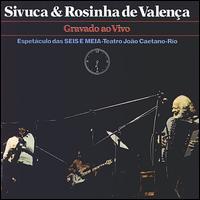
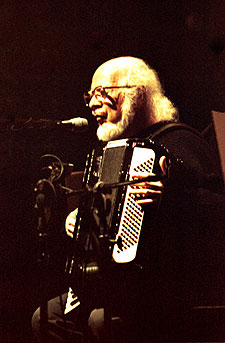 O espetáculo de cerca de duas horas e 27 músicas, idealizado e roteirizado pelo saudoso Albino Pinheiro, para o Projeto Seis e Meia, superlotou o Teatro durante uma semana. Filas homéricas formavam-se desde as primeiras horas da tarde, e muitos fãs, incluindo este que vos escreve, adquiriram ingressos para todas as noites. Gravado ao vivo em um equipamento de apenas quatro canais, o evento foi condensado em um LP (de 8 faixas e 37 minutos) coordenado por Sergio Cabral para a RCA.
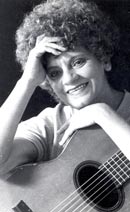 Na faixa que abria o Lado B, finalmente Sivuca & Rosinha atuam juntos, descendo o sarrafo em jazzística versão do clássico “Asa Branca”, gravado anteriormente por Rosinha, em 71, no disco “Um Violão Em Primeiro Plano”. Sivuca pilota um órgão Yamaha no qual faz misérias, produzindo distorções e efeitos (típicos dos sintetizadores Arp e Moog) durante solo de intensa criatividade, sobre viradas endiabradas do batera Luiz Carlos. Rosinha também mostra uma linguagem de improviso extremamente original e brasileira, algo infelizmente não assimilado pelas novas gerações de nossos violonistas, que insistem em ignorar as obras de outros mestres como Laurindo Almeida, Luiz Bonfá e Bola Sete. Em duo de violões, novamente abrindo espaço para improvisos notáveis, Rosinha & Sivuca levam o público ao delírio em “Lamento”, do mestre Pixinguinha.
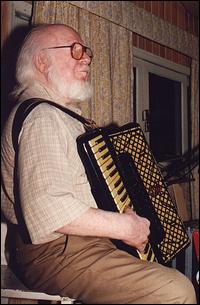 Marco inicial de uma brilhante trajetória no Brasil e no exterior, onde chegou a integrar o grupo Brasil 65, de Sergio Mendes. De volta ao Rio, liderava seus próprios conjuntos, volta e meia atuando com Maria Bethânia e Martinho da Vila, até sofrer, há dez anos, um derrame cerebral que a deixou até hoje em estado vegetativo.
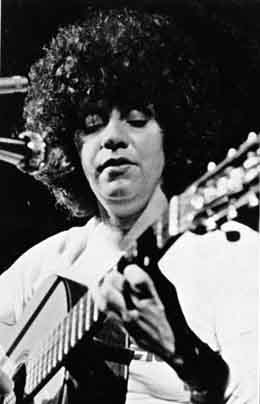 There are certain types of music that just wouldn't be the same without the accordion. One is Louisiana zydeco. Another is norteño/Tex-Mex, a Mexican-American form that combines Mexican ranchera with the German polka beat. And in Brazil, the accordion has played a prominent role in baião, a style that comes from the northeastern part of the country. If the seminal Luiz Gonzaga was the King of Baião, Sivuca is certainly among the people who belongs in the royal palace. The singer/accordion virtuoso doesn't play baião exclusively — he can handle anything from choro to bossa nova — but baião is certainly one of his strong points. And he shows his versatility on Gravado ao Vivo, which offers a diverse program of baião, choro, and samba. This Brazilian reissue focuses on a 1977 concert at Teatro João Caetano in Rio de Janeiro, where Sivuca shared the stage and the spotlight with guitarist Rosinha de Valença. The performances on this album range from instrumentals (which include Pixinguinha's "Lamento" and the Gonzaga standard "Asa Branca") to vocal offerings such as the melancholy "Reunião de Tristeza" (a Sivuca original) and the well-known "Adeus, Maria Fulô." While "Tema do Boneco de Palha" becomes a showcase for de Valença's acoustic guitar, "Asa Branca" is a perfect example of accordion-powered baião. It should be noted that Sivuca and de Valença don't play together on all of the selections — they share the spotlight, and only on "Asa Branca" and "Lamento" do they actually play together. But whether Sivuca or de Valença (or both) is enjoying the spotlight, Gravado ao Vivo is a pleasing document of that 1977 concert in Rio.
 Br-Instrumental no Twitter


 Postagens


