
Clique aqui para baixar o disco/Download the album - RapidShare
........................................................
 Zé Nogueira é constantemente citado como o único brasileiro que toca exclusivamente o sax soprano. Mas domina também teclado e flauta, que começou estudando aos 15 anos. Passou pelos bancos do Conservatório Brasileiro de Música, da Escola Nacional de Música da UFRJ e da Berklee College of Music, em Boston (EUA). Estreou em 1975, tocando sax na peça "Gota d’Água", de Chico Buarque. Posteriormente, participou da "Ópera do Malandro" e de "Rei de Ramos".
Durante anos, tocou em discos e shows de figuras do primeiro time da música brasileira e também fez parte da Banda Zil — com quem gravou um disco — e da Usina. Como produtor musical, esteve à frente de trabalhos de Djavan, Victor Biglione, Leny Andrade e Ney Matogrosso. Participou de festivais em Varadero (Cuba), Montreux (Suíça), Nova York e Japão. Com 20 anos de carreira, gravou o primeiro solo, "Disfarça e Chora", em 1995, um painel do sopro brasileiro, pelo qual foi indicado ao Prêmio Sharp como Melhor Álbum Instrumental. Neste disco, o instrumentista passeia pela música brasileira, desde Cartola, Severino Araújo e Moacir Santos a Guinga e Edu Lobo.
No Free Jazz Festival de 1996, apresentou uma seleção de chorinhos e sambas acompanhado por Leandro Braga, Ricardo Silveira, Zeca Assumpção e Marcos Suzano, confirmando a boa impressão que deixou quando lançou o disco. Nos bastidores do festival, participou durante anos como assessor artístico.
Fez uma incursão pelo cinema. Com Victor Biglione compôs a trilha de "Faca de Dois Gumes" e produziu a trilha composta por Cristóvão Bastos para "Mauá, o Imperador e o Rei".
Extraído do site CliqueMusic
************************
 Having studied at the State University of Rio de Janeiro and at the Berklee College of Music, Zé Nogueira, one of the leading Brazilian instrumental musicians, started in 1975 as a saxophonist in the play Gota d'Água (Chico Buarque), having participated later in Buarque's Ópera do Malandro and Rei de Ramos.
As a sideman Nogueira performed with the top artists of Brazilian music, having being a member of the Banda Zil. His experience in international festivals include Varadero (Cuba), Montreux (Switzerland), New York and Japan. His first solo album came in 1995, when he had already 20 years of career, Disfarça e Chora, having being nominated for the Sharp prize as Best Instrumental Album. In the next year he was one of the attractions of the Free Jazz Festival.
Nogueira also co-wrote (with Victor Biglione) the soundtrack of Faca de Dois Gumes, and in 2001 he had a noted participation in Ouro Negro, a tribute to Moacir Santos.
Alvaro Neder - extracted from All Music Guide


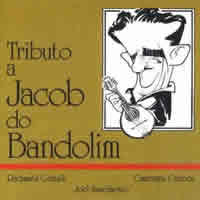
 Grupo instrumental originalmente formado por Joel do Nascimento (bandolim), Raphael Rabello (violão de sete cordas), Luciana Rabello (cavaquinho), Maurício Carrilho (violão), Celsinho Silva (pandeiros) e Luiz Otávio Braga (violão), em 1979, com o objetivo de executar a suíte "Retratos" de Radamés Gnattali. Nesse mesmo ano, Hermínio Bello de Carvalho, que havia presenciado uma apresentação informal dos instrumentistas por ocasião do aniversário do maestro, idealizou e dirigiu o espetáculo "Tributo a Jacob do Bandolim", em homenagem aos dez anos de falecimento do bandolinista, com a participação de Radamés Gnattali e do grupo de músicos que batizou como Camerata Carioca. O show gerou disco homônimo, lançado nesse mesmo ano.
  Camerata Carioca was a group formed and led by the choro mandolinist Joel Nascimento, or Joel do Bandolim. In 1978, Joel do Bandolim asked Radamés Gnattali to transcribe Gnattali's suite, "Retratos," for Joel's choro regional (small ensemble). The transcription reshaped the group into a chamber format, and they adopted the denomination Camerata Carioca (given by Hermínio Bello De Carvalho), which opened doors for a new direction of choro where erudite elements were introduced. The band was formed after The Os Carioquinhas, with Raphael Rabello (seven-string violão), Maurício Carrilho (violão), Luciana Rabello (cavaquinho), and Celsinho (pandeiro). The solo violão of Luiz Otávio Braga was added to this formation. Before the group's opening, Luiz Otávio traveled to Japan with Paulo Moura and was replaced by João Pedro Borges. In 1979, the group, with Joel and Gnattali, performed the tribute show Tributo a Jacob do Bandolim, in Curitiba PR, Rio de Janeiro RJ, and Brasília DF, which was recorded and released through WEA. The group followed a transcription written by Gnattali of Vivaldi's Concerto grosso Op. 3 #11 in D minor and Concerto No. 5: Seresteiro for piano and orchestra, performed by the Camerata at Rio's Teatro Municipal. An increase in their rehearsal routine demanded the departure of Rafael and Luciana Rabello, who were replaced by Luiz Otávio and Henrique Cazes. The percussion was delivered to Beto Cazes. The show Vivaldi and Pixinguinha, also with Gnattali, opened at the Teatro Guaíra (Curitiba PR), recorded and released by Funarte (1980). The Camerata also worked with important singers like Elizeth Cardoso, soprano Maria Lúcia Godoy, and Nara Leão, opening the show Nasci Para Bailar with the latter in late 1982. In the same year, the Camerata shared instrumental tracks with Paulo Moura in Nara Leão's Meu Samba Encabulado. In May 1983, they opened the successful show Uma Rosa Para Pixinguinha with Elizeth Cardoso and Radamés Gnattali, which was recorded live, released in LP format, and reissued on CD. Tocar came out in 1983 by Polygram, also with the participation of Gnattali. In August 1983, the group toured the Northeast in the Pixinguinha Project with great success. In the same month, they received the Shell prize at the Teatro Municipal, where they performed again with Gnattali, along with the Orquestra Sinfônica do Teatro Municipal. In May 1986, Camerata Carioca dissolved after several international tours.
 Br-Instrumental no Twitter


 Postagens


